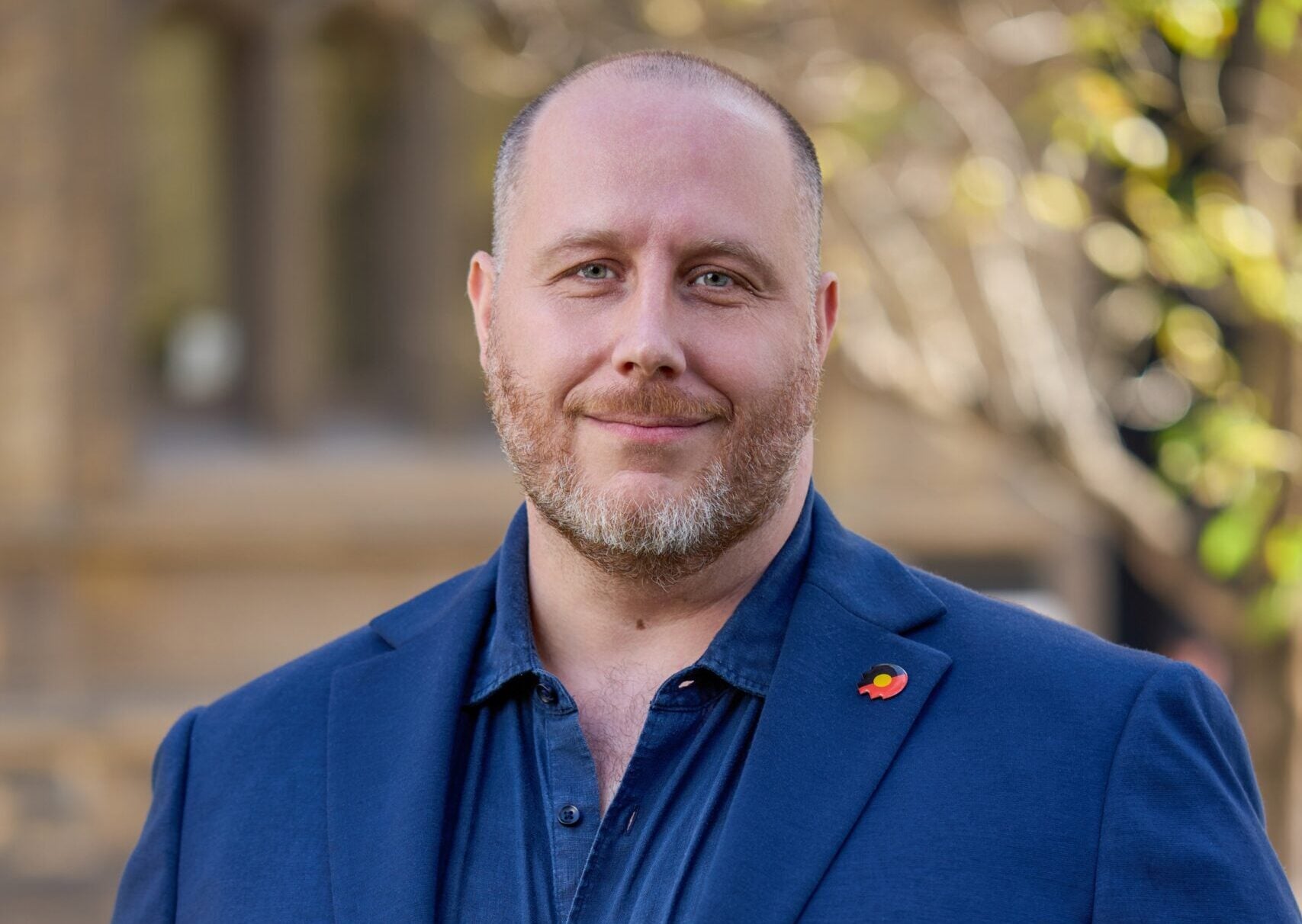
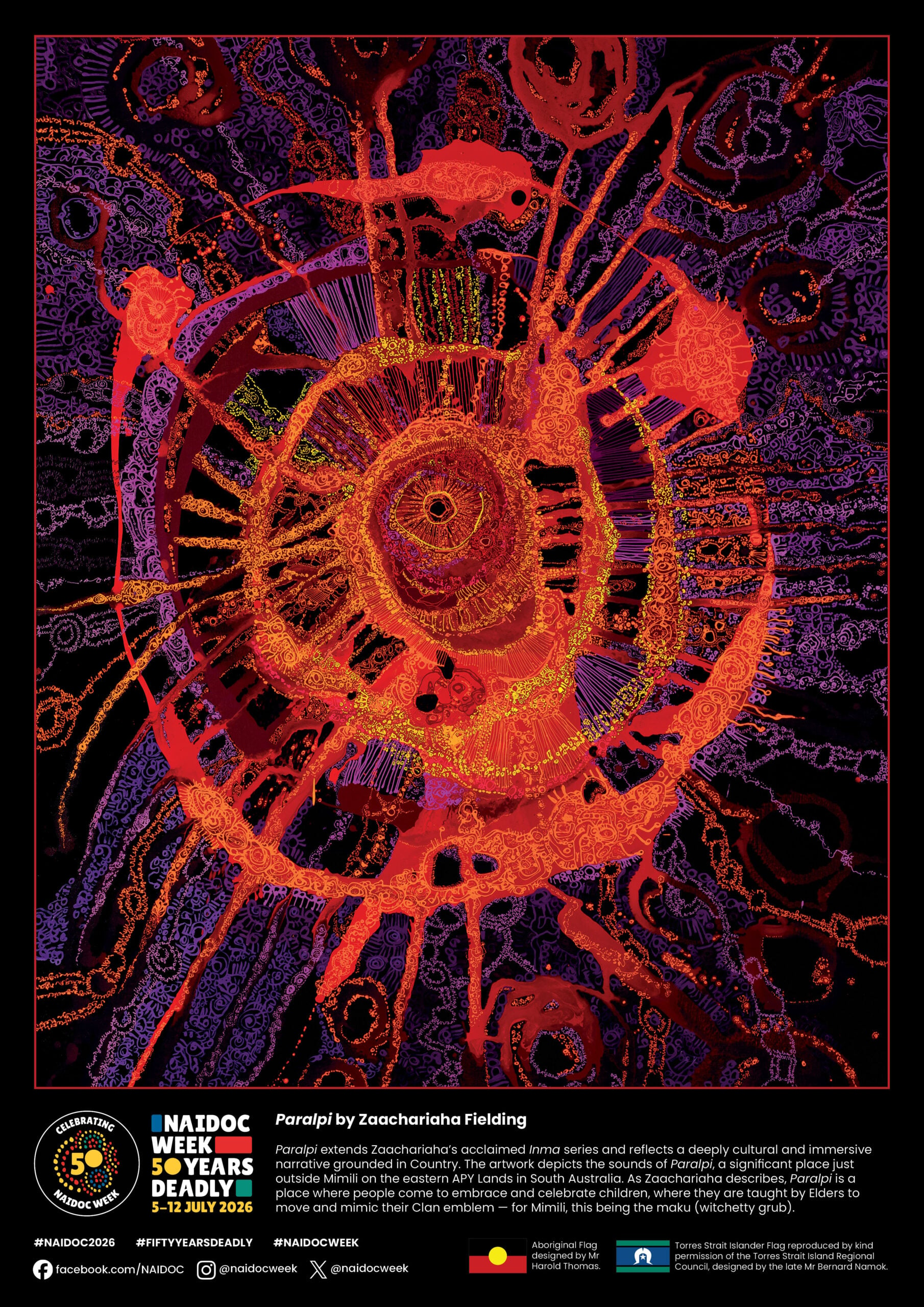
This year marks the 50th anniversary of NAIDOC Week, celebrating the theme ‘50 Years of Deadly.’ To make the occasion, ATN Universities spoke with Boonwurrung Traditional Owner Gheran-Yarraman Steel about leadership, higher education and the enduring importance of First Nations voices.
Gheran-Yarraman is a Senior leader in Strategy and Transformation; Policy and Governance; and Community Impact at RMIT University. On top of this, he is also the President of the National Aboriginal and Torres Strait Islander Higher Education Consortium.
What does NAIDOC Week mean to you personally as a Boonwurrung Traditional Owner?
Growing up in Melbourne’s Inner North, my sense of deep connection has always been shaped by the vibrant community spirit embodied by NAIDOC. For me, this spirit is grounded in unity, joy and strength within the Victorian Aboriginal community, values that are integral to driving social change.
I remember, as a kid, walking down the Black Mile of Fitzroy’s Gertrude Street, holding tightly to my mother’s hand. We would stop by the Fitzroy Stars Gym, the Victorian Aboriginal Health Service (VAHS), or the Aboriginal Legal Service, places where we would connect and yarn with family and our broader Koori community. But this was far more than a series of meeting points; it was the beating heart of our community. It was a centre of grassroots activism, where the people, relationships and ideas that would go on to shape social change first took root in the 1960s within the Victorian Aboriginal community, with impact felt across the country.
Whether through the development of community-controlled organisations or the advocacy for Indigenous rights, including land rights and the 1967 Referendum, these efforts were grounded in that same spirit of bringing people together, strengthening cultural pride, and building the foundations for collective political action.
The cultural affirmation and community bonds celebrated during NAIDOC have long provided both the momentum and the infrastructure for change, supporting landmark achievements such as the 1967 Referendum and the establishment of community-controlled organisations, while ensuring that calls for justice and equality resonate far beyond our own communities.
For me, NAIDOC is not only a time to celebrate those Blak champions who came before us, but a moment to be guided by their legacy as we continue the work ahead, and to share that spirit with the wider Australian community.
How has your Boon Wurrung heritage helped shape your approach to work and leadership?
My Boon Wurrung heritage informs a leadership approach that is grounded in the lessons I learned from my mother, Carolyn Briggs, my Uncle Freddy Briggs and those that have carried the torch of stewardship for our Boon Wurrung knowledges and culture. Those lessons centre on respect, relationality, accountability to community and, importantly, an unshakable resilience. They have taught me that leadership is not about individual authority, but about how you carry responsibility for others and remain answerable to the people you serve.
A core part of that teaching is the understanding that, as Aboriginal people, we often face moments that are catastrophic, personally and collectively, yet we continue to march forward. Our resilience is not about ignoring hardship, but about drawing strength from the responsibility we have to our community and Country to keep moving and keep organising, even when all the odds are against us or the world seems hopeless. We never give up, because what we are fighting for is bigger than ourselves.
My Indigenous heritage reinforces the importance of thinking long term, beyond immediate outcomes, and understanding leadership as stewardship. In practice, that means prioritising genuine engagement over tick‑box consultation, recognising that decisions must be shaped with, not just for, community, and holding firm to our values even in difficult institutional environments.
It also means working to ensure that governance structures are not only inclusive, but genuinely empowering, and maintaining a strong sense of cultural integrity within institutional spaces that were not built with us in mind. For me, being a Boon Wurrung leader in these contexts is about bringing those values and that resilience into the centre of decision‑making and making sure that our communities can see themselves reflected in the way institutions listen, act and change.
This year’s NAIDOC Week theme celebrates 50 years of recognising and elevating First Nations voices. What does that milestone mean to you, and what gives you hope for the future?
Fifty years of NAIDOC reflects both significant progress and much unfinished business. It demonstrates the persistence of Indigenous advocacy in ensuring our voices remain central to national conversations. What gives me hope is the growing expectation, particularly among younger generations, that institutions must move beyond symbolic recognition to substantive change. There is a stronger, more confident cohort of Aboriginal leaders emerging across sectors, and a greater willingness from institutions to be held accountable.
What does it mean to you to be a First Nations leader in Australian higher education?
“Being an Indigenous leader in higher education means working at the intersection of cultural responsibility and institutional influence. It involves advocating for systemic change while navigating structures that are still evolving in their understanding of Indigenous self-determination. It also means creating pathways for others, ensuring that leadership is not individualised, but collective and sustained. Ultimately, it is about reshaping universities and the sector so it better reflect and serves our people.”
Gheran-Yarraman Steel
What more can universities do to create opportunities for First Nations students to access, succeed in and shape higher education?
Universities need to move beyond access as the primary focus and place equal emphasis on success, self-determination and influence. This certainly includes embedding culturally responsive learning environments, strengthening Indigenous-led support services, and ensuring curriculum reflects Indigenous Knowledges. But, Importantly, universities must create mechanisms for Indigenous communities to shape decision-making, not just participate in it, so that their perspectives influence institutional priorities and outcomes. This is what self-determination requires.
What do you see as the biggest opportunity for universities to strengthen First Nations leadership in the years ahead?
The biggest opportunity is for universities to move Indigenous leadership from the margins into the core of how institutions are actually run.
Universities can do this by increasing the number of Aboriginal and Torres Strait Islander people in real decision‑making roles across the institution, particularly at executive management level but also within governance structures such as University Council. When Indigenous leaders are part of the structures that set strategy, allocate resources and determine priorities, cultural integrity and community accountability are much more likely to be embedded, rather than retrofitted.
This also means investing deliberately in Indigenous leadership pipelines. Recruiting, retaining and developing Aboriginal and Torres Strait Islander staff, supporting progression into senior academic and professional roles, and recognising Indigenous talent as valuable, not just a social-equity opportunity. Where universities commit to this, they will not only strengthen their own governance and legitimacy but also contribute to broader structural change across the sector and the country.
Through your work at RMIT and as the President of the National Aboriginal and Torres Strait Islander Education Consortium, what impact do you hope to have for future generations of First Nations students and communities?
I hope to contribute to an education system where our students can see themselves reflected not only in the student body, but in leadership, curriculum and institutional priorities. Through my work, I aim to strengthen frameworks that support self-determination, ensure accountability, and build enduring partnerships with community. Ultimately, the goal is to leave institutions better positioned to support future generations, where success is not the exception, but the expectation for everyone.